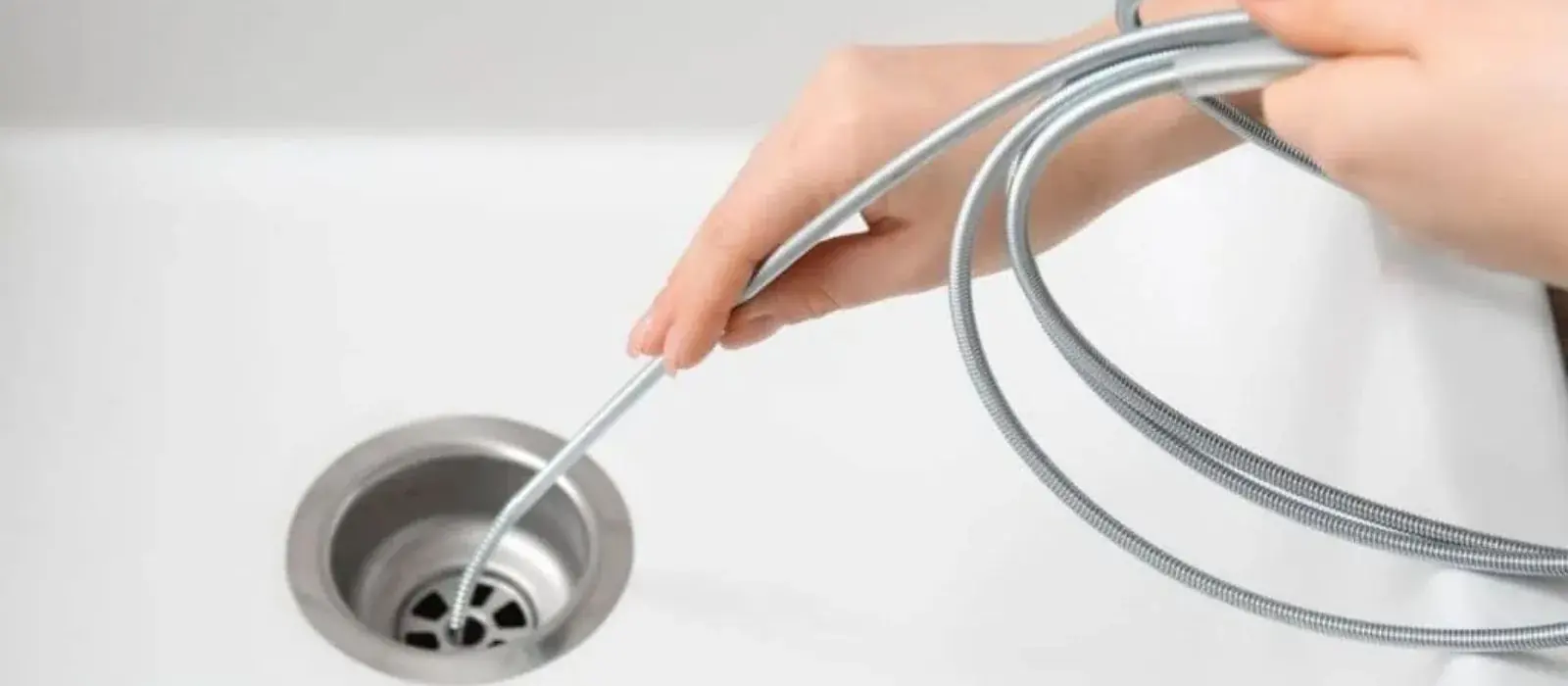
Why bleach rarely clears a clog
Bleach is a disinfectant and a stain remover. It does not dissolve hair, which is the leading cause of bathroom clogs, and it does not break down grease or soap scum in a way that clears the pipe.
At best, bleach sits in the standing water above a clog and does little. At worst, it mixes with something already in the drain or with a cleaner you add next, and that creates a hazard.
Never mix bleach with other cleaners
The CDC warns against combining bleach with ammonia or acids, because the mixture releases toxic gas. Drain cleaners can contain acids or other chemicals, and some bathroom products contain ammonia.
- Do not pour bleach after another drain cleaner.
- Do not mix bleach with ammonia-based glass or floor cleaner.
- Keep a window open and leave the room if you smell fumes.
- Call Poison Control at 1-800-222-1222 for exposure questions.
What each approach actually does
Different clogs respond to different tools.
| Method | Works on | Limits |
|---|---|---|
| Bleach | Odor and stains | Does not clear hair or grease clogs. |
| Plunger | Soft clogs near the fixture | Needs a good seal and some effort. |
| Hand drain snake | Hair in tubs and sinks | Can scratch fixtures if rushed. |
| Chemical drain opener | Some organic clogs | Harsh, risky and can sit in a stuck drain. |
| Plumber's cable or jetting | Deep and stubborn clogs | Calls for the right equipment. |
What to try instead
Start with the least aggressive method and work up.
- Remove the stopper or strainer and clear visible hair and debris by hand.
- Use a plunger with enough water to cover the cup, and work it with steady pushes.
- Use a small hand snake in a tub or sink, turning it slowly to hook or break up the clog.
- If the drain is still slow, or other fixtures are affected too, stop and call a plumber.
Drain still clogged after trying the basics? Call and we will clear it.
Call (205) 896-0120What about hot water and baking soda
Hot tap water can loosen grease in a kitchen drain, though boiling water can damage PVC joints and crack porcelain, so use very hot tap water instead. A baking soda and vinegar mix can freshen a drain, and it does not clear a real clog.
These are fine for maintenance and odor. They are not a fix for a blockage that has already formed.
When a clog points to a bigger problem
A single slow sink usually has a local clog. If a tub, a toilet and a floor drain all slow at the same time, the trouble is probably in the main sewer line, and no chemical will fix it.
In that case, stop using water and read our page on sewer line cleaning. Pouring chemicals into a full main line only adds fumes and risk to the problem.
Why chemicals are a poor choice for a stuck drain
A chemical opener that fails to clear the clog stays in the pipe, waiting for the next person with a plunger or snake. Splashback can burn skin and eyes, and a plumber then has to work around caustic standing water.
If you have already used a chemical, tell the plumber when you call. It changes how they work and what protective gear they wear, and it avoids surprises.
Kitchen clogs and bathroom clogs are different
Bathroom clogs are mostly hair and soap scum, and a hand snake or a drain strainer handles most of them. Kitchen clogs are mostly grease, food and soap that cool and harden in the line, and a snake alone often leaves a narrow channel.
For a kitchen line that keeps clogging, hydro jetting scours the pipe wall clean. For a bathroom line, simple tools and a hair catcher usually do the job.
Habits that prevent clogs
A hair catcher in the tub and shower drains is the single best cheap fix. In the kitchen, wipe greasy pans with a paper towel before washing, and scrape food into the trash instead of the drain.
Never flush wipes, even ones sold as flushable. Run hot tap water for a few seconds after using the kitchen sink, which helps move grease along before it cools.
Using a hand snake without damage
Feed the snake gently into the drain until you feel resistance, then turn the handle to hook the clog. Pull it back slowly, and expect hair and gunk to come with it.
Do not force it past a tight bend, because a jammed snake is harder to remove than the clog. If you are not making progress after a couple of tries, it is time to stop.
What a plumber does that a bottle cannot
A plumber starts by finding where the clog is, then picks a tool to match. A cable cuts through a blockage, a camera shows what is in the pipe and a jetter scours the walls clean.
That is how a clog gets removed instead of pushed around. If you have a repeat clog, a camera look tells you whether the cause is buildup, roots or a damaged pipe, and that decides what will actually hold.
Where drain chemicals end up
Wastewater from your house flows to the public sewer. Trussville Gas and Water lists sewer information on its website and can answer questions about what belongs in the system at 205-655-3211.
Grease and wipes are the real enemies of a sewer line. Keeping them out of drains does more for the public system, and for your own pipes, than any chemical ever will.
Official guidance on mixing cleaners
According to the CDC, bleach should never be mixed with ammonia or with acids, because the mixture releases toxic gas. Poison Control, at 1-800-222-1222, answers questions about exposure.
These guidelines apply to drain cleaners too, since many contain acids or caustic chemicals.
Bleach and drain questions
A small amount of diluted bleach in a drain can reduce odor, but it will not fix the source. A dry trap or a buildup of grease is more likely the cause.
Tell the plumber what you used. Standing chemicals are a hazard, and they need to know before they open the drain.
Occasional small amounts are not likely to damage modern pipes, but regular use is a poor habit. Ask the utility about what is allowed in the system.
Yes. See drain cleaning. We serve Clay, Leeds, Pinson and Springville.
Call if more than one fixture is slow, if water backs up, or if the basics have not cleared it. A repeat clog also deserves a camera look.