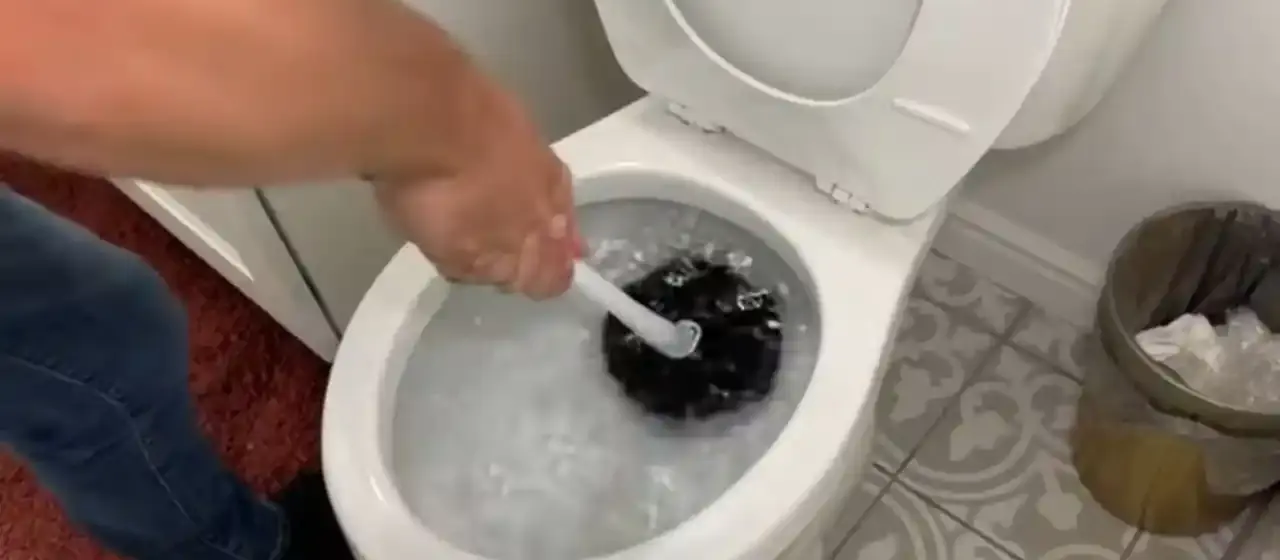
If the bowl is rising, do this first
Act before the water spills over.
- Lift the tank lid and push the flapper down to stop more water entering the bowl, or turn the valve behind the toilet clockwise.
- Do not flush again, because each flush adds water to a full bowl.
- Lay towels around the base and put on rubber gloves.
- Get a flange plunger, which has a rubber extension on the cup, instead of a flat sink plunger.
How to plunge a toilet properly
Make sure there is enough water in the bowl to cover the plunger cup, and add some if needed. Seat the cup over the drain opening so it seals, and push down gently first to push out trapped air.
Then push and pull with steady strokes for about fifteen to twenty seconds. The pull stroke matters as much as the push, since it dislodges the clog. When the water drains, add a little water to confirm the flow.
Toilet won't clear or keeps backing up? Call the 24/7 line.
Call (205) 896-0120Tools and when to use them
Start simple and move up.
| Tool | Use it when | Notes |
|---|---|---|
| Flange plunger | First attempt for most clogs | Needs a good seal and some water. |
| Toilet auger | Plunger fails or the clog is deeper | Designed to avoid scratching the porcelain. |
| Hot tap water and dish soap | Soft clogs from paper | Let it sit, then plunge. |
| Plumber's cable or camera | Repeat clogs or deeper blockages | Checks the line behind the toilet. |
Using a toilet auger
A toilet auger is a short snake with a bent tip that fits the curve of the bowl. Feed the tip into the drain and crank the handle to push through or hook the clog, and pull it back out.
Keep the auger moving gently, and do not force it. If you hit something hard that does not move, such as a toy, stop and call a plumber. Forcing it can damage the toilet or push an object deeper.
What not to do
Do not pour drain chemicals into a toilet bowl. They sit in the standing water, can splash back on you and can harm the porcelain and the wax seal. Do not keep flushing hoping it will clear.
Avoid wire coat hangers, which scratch the bowl. Our article on drain cleaning covers why chemical openers are a poor first choice for any clog.
What commonly clogs toilets
Too much toilet paper is the most common cause, followed by wipes, even those labeled flushable, and feminine products, cotton balls and paper towels. Children's toys are another classic.
Older toilets with low flush power can clog more easily. If your toilet clogs often, the flapper, the fill level or a clogged rim jet may be the cause. See toilet repair for what we check.
Signs the clog is deeper than the toilet
If a second fixture gurgles when you flush, if the shower drains slowly or if a floor drain bubbles, the blockage is probably in the main line. A single toilet that clogs and clears repeatedly may also point to the line behind it.
In that case, stop using water and read about sewer line cleaning. Plunging a toilet connected to a blocked main only pushes wastewater around.
Cleaning up after an overflow
Put on gloves and remove standing water with towels or a wet vacuum. Wastewater carries bacteria, so wash hard surfaces with a disinfectant and throw away items that cannot be washed.
Dry the floor fully and open a window or run a fan. If water reached the subfloor, press on it for soft spots. A damp floor that is not dried can grow mold within a couple of days.
When the base of the toilet leaks after an overflow
A toilet sits on a wax ring or rubber seal that makes the joint to the drain pipe. If the toilet rocks or has been plunged hard, that seal can fail and leak at the base each time you flush.
A telltale sign is water around the base after flushing, or a toilet that wobbles. Fixing it means lifting the toilet and resetting it on a new seal, which is a job for our toilet repair team if you would rather not do it yourself.
Old toilets, low-flow toilets and flush power
Toilets from the early 1990s and before often used more water per flush and had wide, simple passages. Many low-flow models work well, but a few early designs clogged easily and a worn flapper makes any toilet weak.
If a toilet clogs more than once a month, the toilet itself may be the problem. A plumber can check the fill level, the flapper and the rim jets, or suggest replacing it with a model with a better flush.
When to replace the toilet
A cracked bowl or tank, a flange that is damaged or a toilet that keeps clogging despite repairs are good reasons to replace it. A modern toilet also uses much less water, which helps your bill.
We can remove the old one, set the new one on a fresh seal and check the flange, all in one visit. See plumbing installation for fixtures and what to plan.
Keeping kids and pets out of trouble
Toys, wipes and small items cause a large share of toilet clogs, so a closed lid and a quick lesson on what belongs in the toilet go a long way. A lid lock is cheap and works for toddlers.
If something solid went down, stop flushing and tell the plumber what it was. Knowing what to look for helps the technician pick the right tool and avoid damage to the pipe.
Wipes, paper and the public sewer
Trussville Gas and Water lists sewer information on its website, and wipes are a common cause of blockages in any sewer system. Even products sold as flushable do not break down like paper.
The simplest habit is to put wipes in the trash. It protects your own line and the shared system, and it avoids repeat toilet clogs.
What the standards say about flush volume
According to the EPA's WaterSense program, a labeled toilet uses no more than 1.28 gallons per flush. Low volume can make a partial clog more likely if the flush is weak.
If your toilet is older, the plumbing code and the toilet's labeling are one more reason to look at a replacement.
Clogged toilet questions
It becomes one if the bowl is overflowing or other fixtures are backing up. Close the valve behind the toilet and call the 24/7 line if you cannot clear it.
Low flush power, a partial blockage in the line or too much paper are the usual causes. A camera look can show whether the line is the problem.
An overflow can soak the floor and subfloor quickly. Dry the area right away and photograph any damage for insurance.
Yes. We serve Leeds, Springville, Clay and Pinson.
Close the shutoff valve behind the toilet, or lift the tank lid and push the flapper down. Then stop flushing.