What tracer gas leak detection is
A plumber drains the suspect pipe, fills it with a safe tracer gas and uses a sensitive detector at the surface to sniff for the gas escaping. Helium is one common tracer, and a mix of hydrogen and nitrogen is another.
The gas escapes at the leak, travels up through the slab, wall or soil and is picked up by the detector. The reading is strongest closest to the leak, so the plumber can mark a spot rather than guess.
Common leak detection methods
No single tool finds every leak. A good plumber combines methods.
| Method | How it works | Best at |
|---|---|---|
| Acoustic listening | Microphones hear water escaping a pressurized pipe | Pressurized leaks under slabs and in walls. |
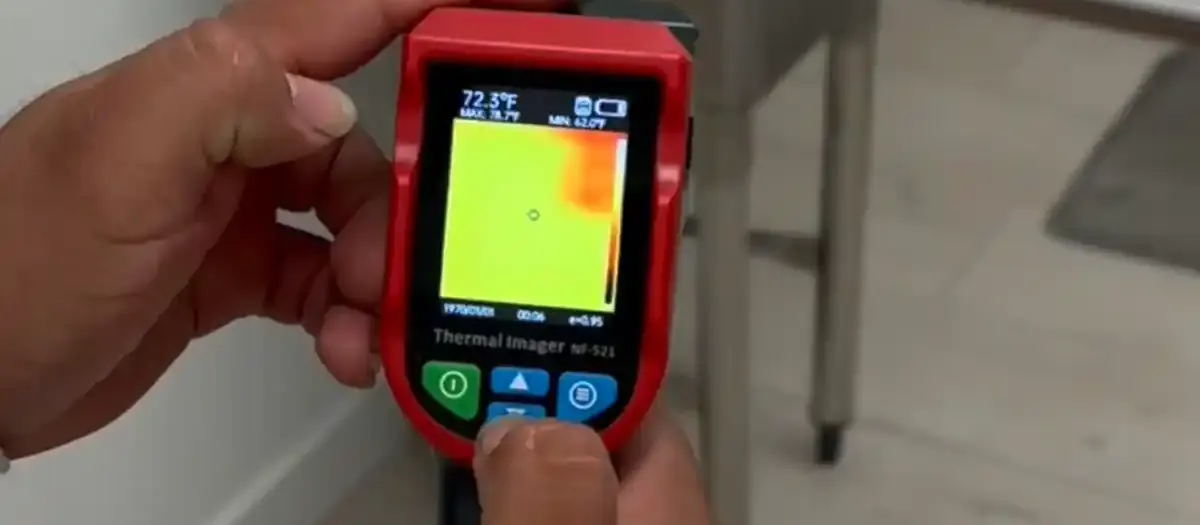
| Thermal imaging | A camera shows temperature differences | Hot water leaks and damp areas. |
| Pressure testing | Isolating and pressurizing a line to see if it holds | Confirming which line is leaking. |
| Tracer gas | Gas escapes from the pipe and a detector finds it | Small leaks, quiet leaks and hard-to-hear lines. |
How a tracer gas test goes
The details vary by equipment, but the process is consistent.
- Confirm a leak with a meter test, with every tap off and the meter still moving.
- Isolate the suspect line, drain it and fill it with the tracer gas mix at a low, safe pressure.
- Scan the floor, wall or ground with a detector along the pipe route and mark the highest readings.
- Open only the marked area, repair the pipe and retest the line to confirm the leak is sealed.
Hidden leak and no idea where? Call and ask which detection method fits.
Call (205) 896-0120When tracer gas is the right choice
It helps where listening gear struggles, such as a very small leak, a leak in a quiet line or a house with background noise. It also suits situations where opening the wrong spot would be costly, like a finished floor or a bathroom with tile.
A leak with strong, loud water flow is often found by listening alone. That is why we pick the method after looking at your situation, not before. Our page on leak detection covers the whole toolkit.
Is the gas safe
Helium is inert and non-toxic, and hydrogen-nitrogen tracer mixes used for this work contain a small amount of hydrogen that is not flammable at that dilution. Professionals use them in occupied homes as a routine matter.
Still, follow your plumber's instructions about ventilation and keeping the line isolated during the test. The test pressure is low, and the process does not affect your drinking water.
What it can and cannot do
Tracer gas finds the location of a leak, but it does not repair it. After the leak is found, the repair is a normal plumbing job, and for a leak under concrete that means the work described on our slab leak repair page.
It also needs the pipe to be isolated and drained, which can take time and may mean a few hours without water. A plumber can tell you what to expect before starting.
Older houses and hidden leaks
Trussville's oldest homes include Cahaba Project houses built in 1938, which came with indoor plumbing, and neighborhoods from the 1930s and 40s along Chalkville Road. Pipes in houses of that age may have been replaced piecemeal over the decades.
Mixed pipe materials mean more joints and transitions where leaks can start. A detection method that avoids tearing up original plaster or old floors can be a real advantage in a house like that.
What detection costs and what it saves
Published guides, such as This Old House's cost guide updated in April 2026, list slab leak detection at roughly $150 to $600 nationally. A local quote will depend on the house and the method.
Detection is a small part of the total, and it is often the step that saves the most. Cutting a floor in the wrong place costs far more than finding the right spot first.
The meter test, step by step
Turn off every faucet and appliance that uses water, including the ice maker and any irrigation. Find your meter and note the dial or low-flow indicator, then wait fifteen minutes and look again.
If the reading moved, water is leaking somewhere on your side of the meter. Close the main valve at the house and check again. If the meter stops, the leak is inside the house, and if it keeps moving, the leak is between the meter and the house.
After the leak is found
The repair depends on the pipe, the location and the damage. A single failure can be a spot repair, and several failures in an old line may mean a reroute or repiping.
We explain the options in plain terms and give a price before work begins. If the leak caused water damage, take photos and call your insurance agent before anything is removed.
What to do before the technician arrives
Clear access to the areas near suspected leaks, and move rugs or furniture that might get in the way. Tell the technician what you have noticed and when it started, including any change in the bill.
Know where your main shutoff is, because the test may need the water off for a while. Pets and children should be kept clear of the work area, since the equipment and gas lines need space.
Check the meter before paying for detection
A simple meter test costs nothing. With every tap and appliance off, look at your meter, and if the leak indicator or dial moves, water is escaping somewhere.
Trussville Gas and Water, at 205-655-3211, handles meter and billing questions. If the meter is moving and your house plumbing is dry, the leak may be on the service line, and detection starts outdoors.
Standards and sources for leak detection
According to the EPA's WaterSense program, household leaks can waste nearly 10,000 gallons of water a year. Tracer gas methods used in plumbing follow the equipment maker's guidelines for pressure and ventilation.
Ask your plumber to explain the test pressure and the steps they take before pressurizing a line.
Tracer gas leak detection questions
Our line is open 24/7. An active leak is worth a call at any hour, and we book the earliest visit we can.
No. Some detectors use a hydrogen and nitrogen mix instead. Both work for the same purpose.
Yes, often. It is one of several methods, and a plumber may combine it with listening or thermal checks.
Yes. We serve Clay, Pinson, Leeds and Springville.
A moving meter with taps off, a rising bill, damp spots and the sound of running water are the signs. Start with the meter test.