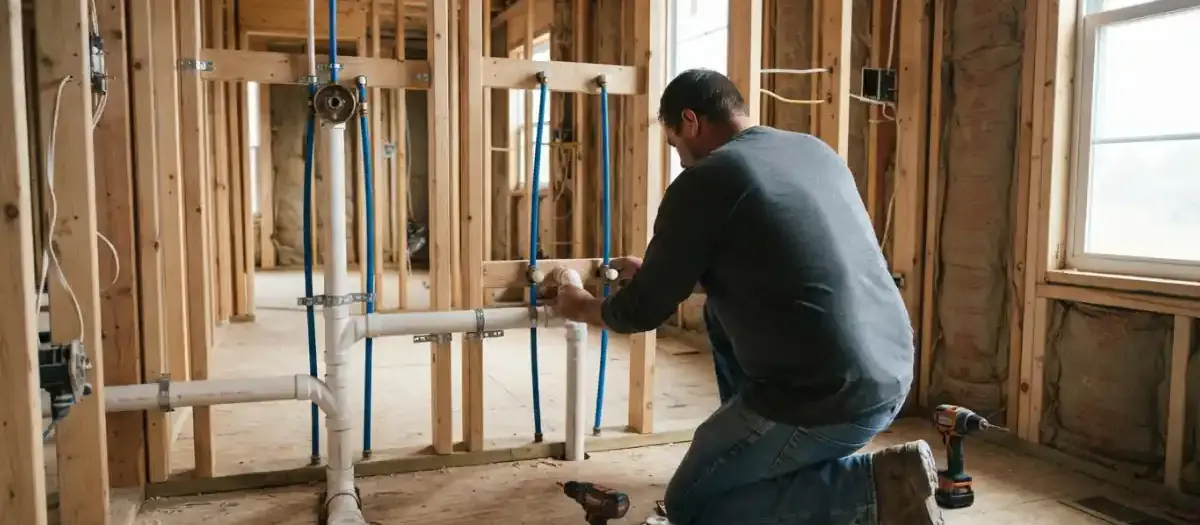
What a vent pipe does
Every drain needs air behind the water. Without it, flowing water pulls a vacuum that sucks the water out of the trap under your sink, and that water seal is what blocks sewer odor from entering the room.
A vent pipe gives that air a path. It rises from the drain line, usually through a wall and out the roof, and it also lets sewer gas escape above the house. Gurgling drains, slow flow and sewer smells are the common signs that venting is wrong or blocked.
Signs the venting may be wrong
These symptoms point at the vent system, not just a clog.
- Gurgling from a drain when another fixture runs.
- A sewer smell with no visible leak.
- Slow draining across several fixtures at once.
- A toilet that bubbles when the washer drains.
Vent types you may run into
Codes allow several layouts. Which one fits depends on the room and the pipe run.
| Type | How it works | Typical use |
|---|---|---|
| Individual vent | A vent for one fixture rising to the main vent stack | New bathroom and kitchen rough-ins. |
| Wet vent | A pipe that carries both waste and air for another fixture | Bathroom groups where code allows it. |
| Air admittance valve | A one-way valve that lets air in but keeps gas out | Hard-to-vent fixtures, where local code permits. |
| Stack vent through the roof | The main vent pipe extending through the roof | Every house needs at least one. |
What a vent pipe installation involves
This is the general order of work. Your plan and local code decide the details.
- Plan the route from the fixture drain up to the main vent or through the roof, keeping the vent above the trap and sloped to drain.
- Cut and join the pipe, usually PVC or ABS, using the right solvent cement and supports.
- Flash and seal the roof penetration so it does not leak.
- Test the system and check each fixture for gurgling or slow drains.
Sizing, slope and distance in plain terms
Vent pipes must be large enough to move air, and they must connect in a way that water cannot sit in them. A horizontal vent should rise away from the drain so any moisture that gets in runs back down.
Each trap also has a maximum distance to its vent, set by code and depending on the drain size. Go too far and the trap can siphon dry. This is the detail most often missed when someone adds a fixture far from an existing stack.
Roof penetrations and flashing
The vent pipe leaves the house through a roof opening sealed with flashing, a boot or collar that sheds water. Cracked rubber boots are a common cause of attic leaks around vent pipes, and they can fail years after the original work.
The pipe should extend high enough above the roof for the climate and local code. In winter, frost can close the opening of a small vent, so size matters there too.
What to check before you call
Run each fixture one at a time, then run two at once. If the gurgle only shows up when two run together, the venting may be shared and strained. If one fixture is slow every time, a clog is more likely than a vent problem.
Smell the room and the area around the roof vent outside. A strong sewer smell indoors with a dry trap means the water seal has been pulled out. Pouring water into an unused drain to refill the trap is a quick fix, but it does not solve the cause.
Gurgling drains or a sewer smell? Call and we will check the venting.
Call (205) 896-0120Why this job is not a casual weekend project
A vent that is too small, too far from the trap or connected at the wrong angle can leave a house with drains that never quite work. Code sets the sizes and maximum distances, and the rules vary by jurisdiction.
Roof work adds risk and a leak path into the attic if the flashing is wrong. For any new bathroom or remodel, see plumbing installation, and for a slow drain that might be venting, start with drain cleaning to rule out a plain clog.
Special cases: islands, basements and additions
A kitchen island sink has no wall to carry a vent, so it often uses a loop vent or, where code permits, an air admittance valve. A basement bathroom below the sewer line may need an ejector system, which has its own vent requirements.
Room additions add fixtures to a system that was sized for the original house. A plumber checks the existing stack and drain before connecting anything, because a house that coped with two bathrooms may struggle with three.
Permits and who can do the work
Adding or changing a drain-waste-vent system is usually permit work. Ask City of Trussville Building Safety and Inspections, at 205-655-5483, whether your project needs one, because the office can tell you what to submit.
The Alabama Plumbers and Gas Fitters Examining Board offers a licensee search for consumers. Use it for any plumber you hire. It is a quick step and it protects you on a job that will sit behind a finished wall.
Newer subdivisions and older streets
Trussville's land area tripled after the 1985 to 1987 annexation, so homes here come from many eras and building codes. Houses from the Chalkville Road neighborhoods of the 1930s and 40s were plumbed to very different standards from houses built in the decades since.
That matters for venting. An older house that has been remodeled may have venting that worked for its original layout and fails for the new one, so tell your plumber what has been added.
Plumbing vent pipe questions
Yes. Poor venting can slow drainage and make fixtures gurgle. A plumber can tell a clog from a venting problem by testing each fixture.
A blocked vent can cause gurgling and odor. Clearing it means roof access, so a plumber or roofer should do it safely.
Often yes for new or changed drain-waste-vent work. Call the Department of Building Safety and Inspections at 205-655-5483 to confirm for your address.
Usually, though the options depend on the layout. Our plumbing installation team can plan a route that meets code.
Yes. We serve Clay, Pinson, Leeds and Springville as well as Trussville.