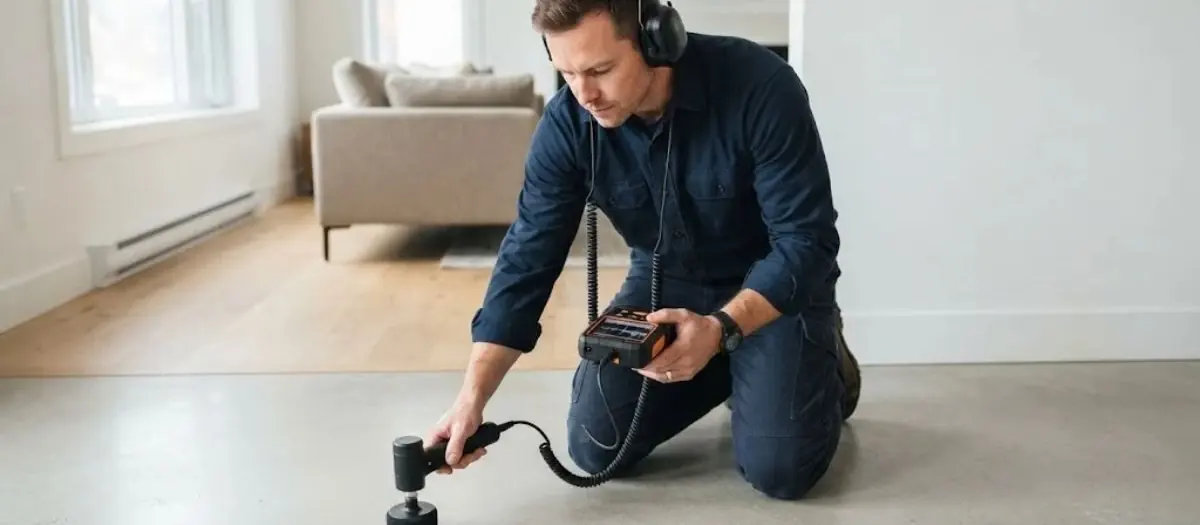
Signs of a leak under the slab
No single sign proves it, but several together are a strong clue.
- A warm spot on the floor, which suggests a hot water line.
- The sound of running water with every tap off.
- A steady rise in the water bill with no change in use.
- Damp carpet, lifted flooring or cracks in tile.
First confirm a leak exists
Run the meter test with all water off, as described in our guide to leak detection. If the meter keeps moving, water is escaping. Then close the main valve at the house and check again.
If the meter stops with the main closed, the leak is inside the house. If it keeps moving, the leak is between the meter and the house, which is a service line problem and not a slab leak.
How plumbers pinpoint the leak
The process moves from broad checks to a small search area.
- Isolate the hot and cold lines and test each with pressure to find which line is leaking.
- Listen along the pipe route with acoustic equipment, since pressurized leaks make a distinct sound.
- Scan with thermal imaging for warm or damp patterns on the floor surface.
- Confirm the spot with a second method, then mark it before any cutting.
Warm floor or running-water sound? Call the 24/7 line.
Call (205) 896-0120Detection tools and what they do
Using more than one method is what keeps the search accurate.
| Tool | What it detects | Limits |
|---|---|---|
| Acoustic listening | The sound of water escaping a pressurized pipe | Background noise can interfere. |
| Thermal camera | Temperature differences from hot leaks | Works best with hot water lines. |
| Pressure test | Which line is losing pressure | Does not give the location. |
| Tracer gas | Gas escaping through the slab | Needs the line isolated and drained. |
Why the wet spot is not always the leak
Water under a slab follows the easiest path, which can be along a pipe trench, under a wall or through gravel. A damp patch in one room can be several feet from the failure.
That is why guessing is expensive. Cutting a slab in the wrong place costs time and money, and it does not fix the leak. Detection first is almost always cheaper, and our page on slab leak repair describes the repair that follows.
Is your house on a slab?
Only homes with a concrete slab floor can have a slab leak. Homes with a crawl space or a basement can have hidden leaks too, but they are usually easier to reach, and the repair is different.
Check how your floor is built. If you are not sure, look for a crawl space access panel or a basement door, and ask when you call. The answer shapes how we plan the search.
What happens after the leak is found
If the leak is small and in a sound pipe, a spot repair is likely. If the pipe is old or shows damage in several places, rerouting the line through the attic or walls, or a repipe, may be the better route.
We explain your options in plain terms and give a price before work starts. See repiping if the whole system looks tired, and ask about the floor restoration plan at the same time.
What to do while you wait: protecting your home
If you suspect a slab leak, closing the main water valve stops the loss. Move rugs and valuables off wet areas, and open windows or run fans to dry the air if the leak has caused dampness.
Photograph any visible damage and keep receipts. If mold is a concern, a drying plan matters as much as the plumbing repair.
Hot water lines and cold water lines
Hot water lines are the more common source of warm spots, because the hot water raises the floor temperature. A leak in a cold line does not warm the floor, so it shows up in other ways, like sound, damp flooring or a moving meter.
A plumber tests each line separately to learn which is leaking. That narrows the search and often cuts the time the equipment needs.
How a pressure test works
The plumber closes the main valve, isolates a line and attaches a gauge to it. If the pressure holds, that line is sound, and if it drops, the line is leaking.
Testing the hot and cold lines one at a time tells you which to search. It does not give the exact location, so the plumber moves on to listening, thermal or tracer methods to find it.
Moisture, mold and drying
A leak that has run for a while can leave moisture under flooring, in the slab and in wall bases. Drying matters as much as the pipe repair, because damp material feeds mold.
After the repair, check the flooring and baseboards for dampness, and run fans or a dehumidifier. If you see mold or smell mustiness that does not clear, ask about professional drying.
What to ask a detection company
Ask which methods they use and whether they confirm a spot with a second method before cutting. Ask what is included in the price, and whether the detection fee applies toward the repair if you hire them.
Ask for the marked location to be photographed. That record helps you, your insurer and any contractor who handles the floor, and it shows exactly where the leak was found.
Trussville's mix of homes
Trussville's land area tripled after the 1985 to 1987 annexation, and its housing runs from the Chalkville Road neighborhoods of the 1930s and 40s to later subdivisions near I-59 and I-459. Foundation types and pipe materials vary across them.
That variety is why no one answer fits every house. For permit questions on larger repairs, the City of Trussville's Department of Building Safety and Inspections is at 205-655-5483.
Sources for the detection methods
According to This Old House's April 2026 cost guide, slab leak detection averages $150 to $600 nationally. Acoustic and thermal tools are used according to the equipment maker's guidelines.
A plumber should explain which method they are using and why.
Slab leak detection questions
A leak creates a localized warm spot, often along a pipe route, while a heating system warms a room more evenly. A thermal camera tells them apart.
Yes. Listening, thermal and tracer methods find the spot from above, and the floor is opened only at the marked location.
It can be. Water running under a slab can undermine soil and flooring, so close the main and call if the leak is large.
Yes. We serve Clay, Pinson, Leeds and Springville.
Policies differ. Some cover access and detection when damage is sudden, and many do not. Ask your agent before work begins.