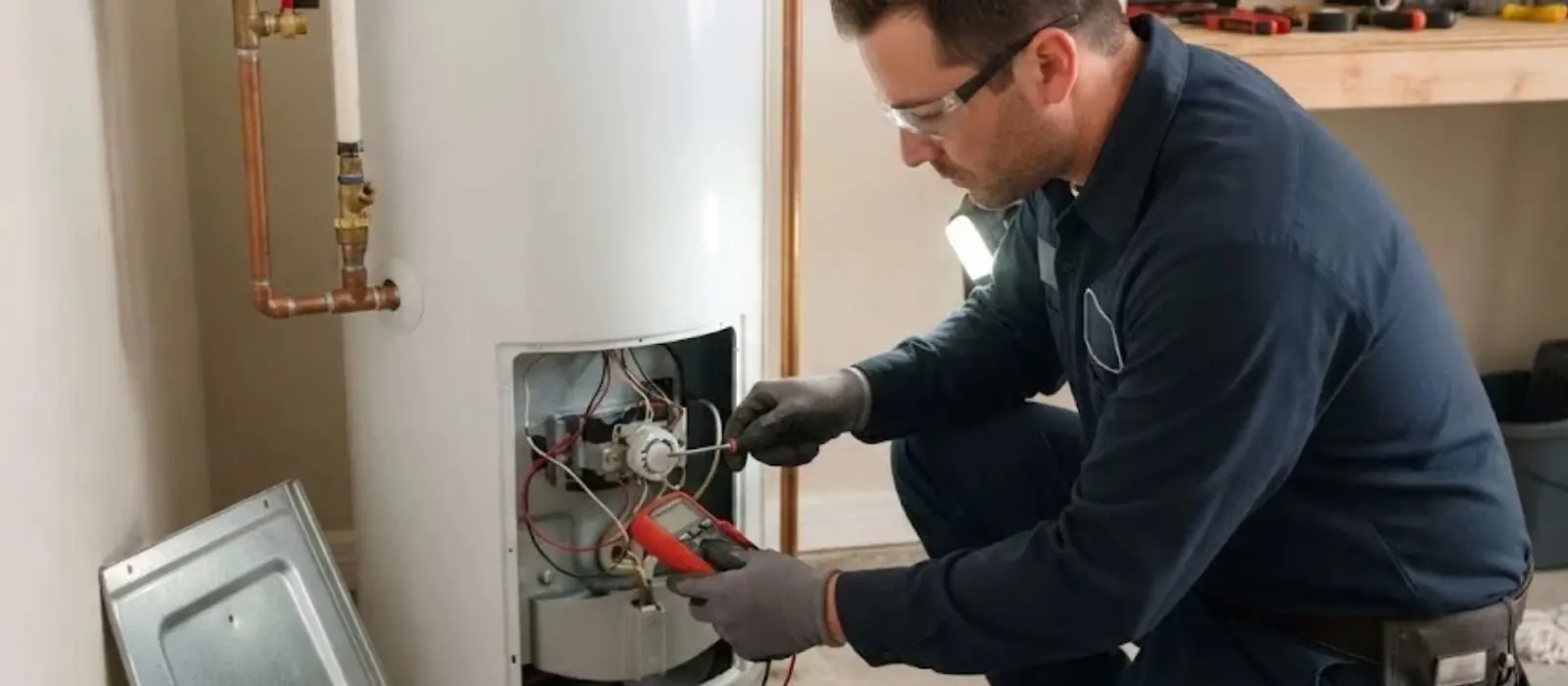
What a thermocouple does
A thermocouple is a small metal probe that sits in the pilot flame. The heat generates a tiny electrical signal that tells the gas valve the pilot is lit, and that keeps the gas flowing.
If the probe fails or the flame does not heat it properly, the valve shuts off the gas. That is a safety feature, and it is why a failed thermocouple shows up as a pilot that lights and then goes out when you release the knob.
Signs the thermocouple may be failing
These symptoms suggest the sensor, though other parts can cause them too.
- The pilot lights but goes out within a minute or two.
- The pilot light stays lit only while you hold the button.
- Soot or discoloration on the probe tip.
- No hot water and a dark pilot assembly.
Safety first, because this is a gas appliance
If you smell gas at any time, leave the house, do not touch switches or phones inside and call 911 or the gas utility from outside. Trussville Gas and Water also supplies natural gas, and the number is 205-655-3211.
Never try to bypass a safety device or hold a pilot open with tape or a wedge. The thermocouple exists to shut off gas when the flame is out. If you are not comfortable working near a gas valve, call a plumber.
How replacement works
Follow your manufacturer's instructions. This is the general order and not a substitute for them.
- Turn the gas control to off and wait several minutes so any leftover gas clears.
- Remove the burner access panel, unscrew the thermocouple nut at the gas valve and the bracket at the pilot.
- Fit the new thermocouple, seat the tip in the pilot flame path and tighten the nut snugly without overtightening.
- Relight the pilot per the label, test that it stays lit and check connections with a soapy water solution for bubbles.
Why a pilot goes out even with a good thermocouple
Dust and lint can clog the pilot orifice and weaken the flame, and a weak flame does not heat the probe enough. A draft from a vent or a garage door can also blow the pilot out, especially in a utility closet with poor sealing.
Look at the flame color. A steady blue flame that wraps the thermocouple tip is healthy. A yellow, lazy or flickering flame suggests dirt, a draft or a combustion air problem, and that needs a technician, not just a new part.
Relighting safely, and where to stop
Every heater has a label with lighting instructions, and you should follow it exactly. The common pattern is to turn the control to pilot, hold the knob in, light the pilot and keep holding for a minute before releasing.
Stop and call a plumber if you smell gas, if the pilot will not stay lit after two or three careful tries, or if you see rust, scorch marks or water around the burner. Repeated relighting attempts with a failing safety device are not the answer.
Pilot won't stay lit? Call and we will diagnose the sensor and the gas valve.
Call (205) 896-0120When it is not the thermocouple
A new thermocouple does not fix every pilot problem.
| Symptom | Other likely causes | What helps |
|---|---|---|
| Pilot out after a short time | Dirty pilot orifice, drafts | Clean the pilot assembly. |
| Pilot lit, burner won't fire | Failed gas valve or thermostat | Test and replace the valve. |
| Pilot won't light at all | Gas supply, blocked orifice | Check the supply and clean. |
| Smell of gas | Leak at a connection | Leave and call 911 or the utility. |
Newer heaters may not have a pilot at all
Many modern gas water heaters use electronic ignition with a flame sensor instead of a standing pilot and thermocouple. The symptoms look similar, with no hot water and a heater that tries to start, but the parts and the fix are different.
Check the label and manual to see which type you have. If the heater is more than about ten years old and failing, read about water heater replacement before paying for another repair.
Repair or replace
A thermocouple is a modest repair, and for a heater in good shape it is usually the right fix. If the tank is old, corroded or leaking, though, a new part buys little time.
We look at the age, the tank condition and the gas valve when we diagnose a pilot problem. Our page on water heater repair describes what we check and how we decide with you.
Costs and what to ask for
A thermocouple itself is an inexpensive part, and most of the cost of a visit is the diagnosis and labor. Ask your plumber to confirm the cause before replacing anything, because a clogged pilot orifice or a bad gas valve looks identical from the outside.
Ask whether the quote includes testing for gas leaks at the connections and checking that the burner flame is healthy. Those steps cost little and tell you the repair actually fixed the problem.
Your gas utility and your gas shutoff
Know where the gas shutoff valve for the water heater is, and know where the meter shutoff is outside. If you ever smell gas, that knowledge can save time.
Trussville Gas and Water, at 205-655-3211, can answer gas service questions. For any smell of gas, 911 is the right first call.
Gas safety guidance to follow
Gas appliance work follows the manufacturer's instructions and the National Fuel Gas Code, NFPA 54. According to the instructions on most heaters, you should not relight a pilot if you smell gas.
If you are unsure at any step, stop and call a plumber, because the cost of a visit is small next to the risk.
Thermocouple questions
Not by itself, because the gas stops when it fails. You will have no hot water, so you will want to book a visit soon. A smell of gas is a different matter, and you should leave and call 911.
If the pilot stays lit while you hold the button and dies when you release it, the thermocouple is the usual suspect. If the pilot stays lit but the burner will not fire, the valve or thermostat is more likely.
Sediment from hard water can collect in the tank and insulate the water from the burner, which makes the heater work harder. Trussville Gas and Water's 2026 report lists hardness as 205, and the table does not print a unit.
Yes. We serve Pinson, Clay, Leeds and Springville.
Often yes, depending on the gas line and venting. Read about tankless water heaters before you decide.